
✨ OUR APPROACH ✨
A Leadership Framework for Building Aligned, High Performing Teams

The Founder Pattern → Team Performance Model™
A Leadership Framework for Building Aligned, High-Performing Teams
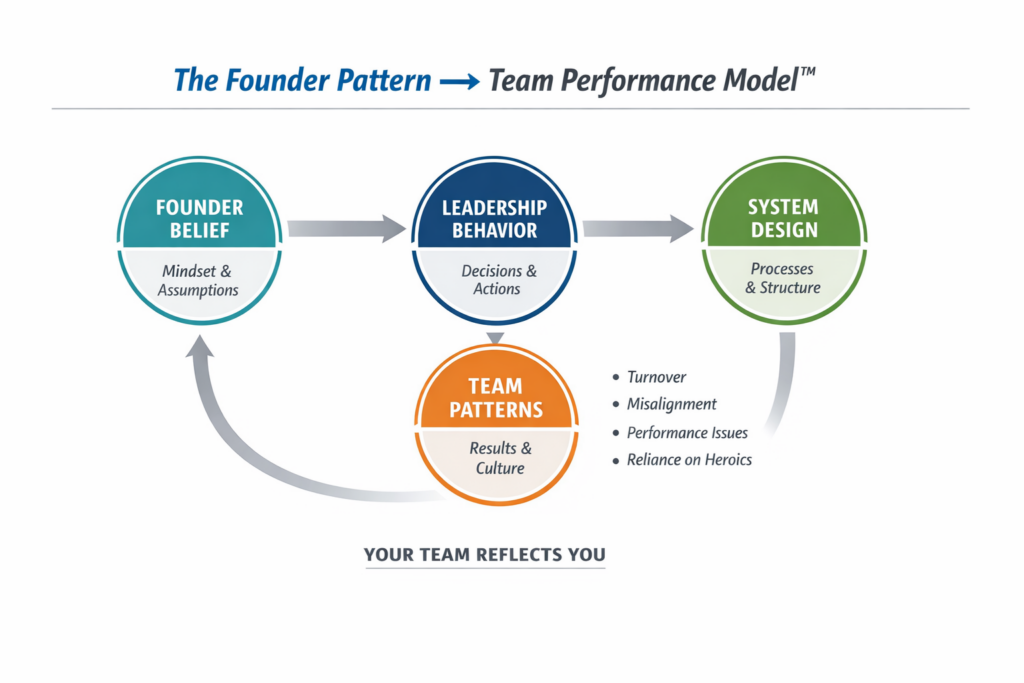
The Founder Pattern → Team Performance Model™ is a leadership framework that explains how a founder’s beliefs, identity, and leadership patterns shape business systems—and ultimately determine team performance.
It is based on a simple but often overlooked truth:
Your team is not separate from your leadership. It is a reflection of it.
This model helps founders move beyond surface-level fixes like hiring or restructuring, and instead identify the deeper patterns that are driving results inside their business.
What This Model Explains
As businesses grow, many founders experience similar challenges:
- Hiring feels inconsistent or unpredictable
- Delegation doesn’t stick
- Performance varies across the team
- Turnover or disengagement increases
- The business still depends heavily on the founder
Most of these challenges are treated as operational issues.
But in reality, they are the result of deeper, systemic patterns.
This model explains why those patterns form—and how to shift them.
The Core Principle
Your business doesn’t grow based on strategy alone.
It grows to the level of the founder’s beliefs, identity, and leadership patterns.
And those patterns don’t stay internal.
They shape:
- How you lead
- How your business is structured
- How decisions are made
- How your team operates
Which means your results are not random.
They are being produced by a system.
The Four Components of the Model
1. Founder Beliefs
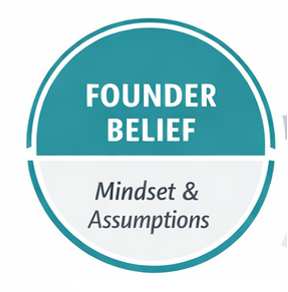
What you believe (often unconsciously)
Every founder operates from a set of internal beliefs and decisions:
- What you believe about money, value, and growth
- What you believe about people, trust, and capability
- What you believe about your role as a leader
These beliefs act as the source code of your business.
2. Leadership Behaviour
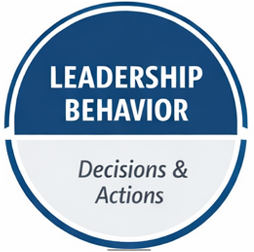
How those beliefs shape your actions
Your beliefs influence how you lead:
- How you communicate expectations
- The standards you set—or tolerate
- How you make decisions
- How you delegate (or stay involved)
This is where internal patterns become visible in your day-to-day leadership.
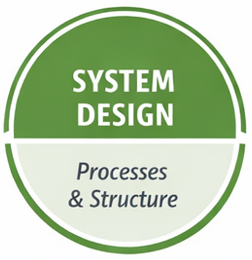
3. System Design
What gets created (or not created)
Your leadership behaviour shapes your business systems:
- How roles are defined
- How work flows through the organization
- Whether processes exist—or rely on individuals
- How accountability is structured
Systems are not neutral.
They are a direct expression of leadership patterns.
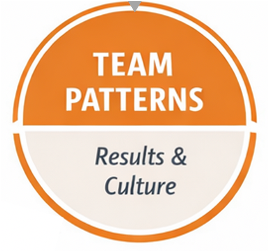
4. Team Patterns
What shows up in your team
This is where most founders focus their attention:
- Turnover
- Performance issues
- Misalignment
- Lack of ownership
- Reliance on the founder
But these outcomes are not random.
They are the predictable result of everything upstream.
The Reframe
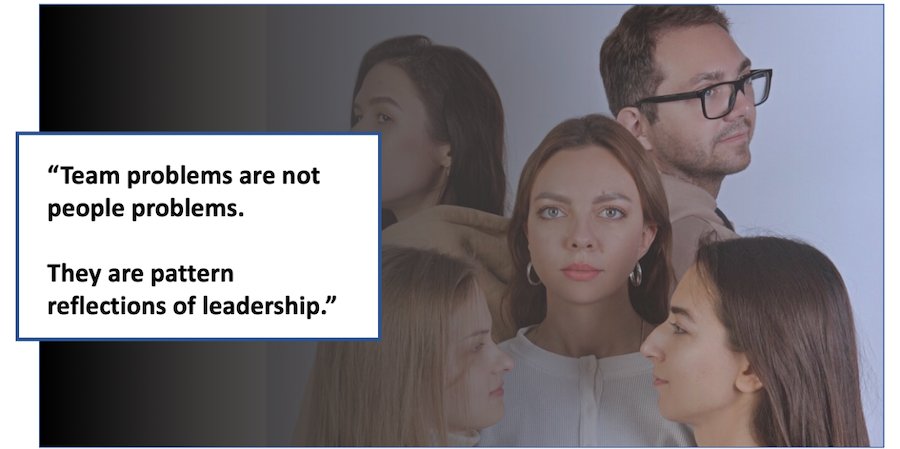
Team problems are not people problems.
They are pattern reflections of leadership.
The Good News!
This shift moves founders out of constant reaction—and into intentional design.
Why This Model Matters
Without understanding the underlying pattern, most solutions remain temporary:
- You hire—but encounter the same issues
- You add structure—but it doesn’t hold
- You delegate—but still get pulled back in
Because the system producing those results hasn’t changed.
When you shift the pattern, everything downstream begins to change.
Real-World Application
When founders apply this model, they begin to see measurable shifts:
- Hiring becomes clearer and more aligned
- Delegation becomes effective and sustainable
- Teams take ownership of outcomes
- Performance stabilizes across the organization
- The founder is no longer required in day-to-day operations
This is what allows businesses to scale with greater ease and consistency.
Where to Start
If you’re experiencing friction in your team, start by asking:
- What patterns keep repeating?
- Where does the business rely on individuals instead of systems?
- What expectations or standards have not been clearly defined?
- What might my team be responding to in my leadership?
Because when you can see the pattern clearly, you can begin to change it.
Explore the Model in Practice
To see how this model applies in real business scenarios:
- Read the full breakdown in the Pillar Article
- Explore The Aligned Team series on LinkedIn
- Download The Aligned Team Shortcut (framework + assessment)
About Angela Heit
Angela Heit is a business strategist and leadership advisor with over 30 years of experience in behavioural psychology, organizational design, and change management.
She has worked with hundreds of entrepreneurs and leadership teams—from early-stage founders to corporate organizations—helping them build aligned, high-performing teams that support sustainable growth.
Her work bridges inner leadership patterns with practical business systems, enabling founders to scale their businesses without remaining tied to daily operations.
Final Thought
Your team is not random.
Your challenges are not random.
They are responding—intelligently—to how your business is currently designed.
The question is:
What are they reflecting back to you?